





Gallery


Philippine News Agency Super Admin
Apr 10, 2026
08:11 AM
Focused on advancing the Clinical Legal Education Program (CLEP), the #SupremeCourtPH (SC), through the Oversight Committee for the Implementation of 𝘙𝘶𝘭𝘦 138-𝘈 or the 𝘙𝘦𝘷𝘪𝘴𝘦𝘥 𝘓𝘢𝘸 𝘚𝘵𝘶𝘥𝘦𝘯𝘵 𝘗𝘳𝘢𝘤𝘵𝘪𝘤𝘦 𝘙𝘶𝘭𝘦, convened a 𝘊𝘰𝘭𝘭𝘰𝘲𝘶𝘪𝘶𝘮 on March 24 to 26, 2026, in Mandaue City, Cebu.
Anchored on 𝘙𝘶𝘭𝘦 138-𝘈 of the 𝘙𝘶𝘭𝘦𝘴 𝘰𝘧 𝘊𝘰𝘶𝘳𝘵, CLEP allows law student practitioners to gain hands-on experience by assisting in real cases and serving actual clients under supervision. It helps expand access to justice for marginalized communities while helping students become practice-ready lawyers.
Titled “CLEP at the Core: Strengthening Andragogy for Practice Readiness and Access to Justice,” the 𝘊𝘰𝘭𝘭𝘰𝘲𝘶𝘪𝘶𝘮 served as a platform to review the program’s implementation, share best practices, discuss challenges, and develop concrete proposals for improvement.
Senior Associate Justice Marvic M.V.F. Leonen, Chairperson of the Oversight Committee for the Implementation of 𝘙𝘶𝘭𝘦 138-𝘈, emphasized that clinical legal education lies at the center of lawyer formation and plays a crucial role in shaping lawyers who are technically competent, ethically grounded, and socially responsive.
He explained that experiential learning allows students to internalize professional responsibility, exercise judgment, and understand the public service nature of the legal profession.
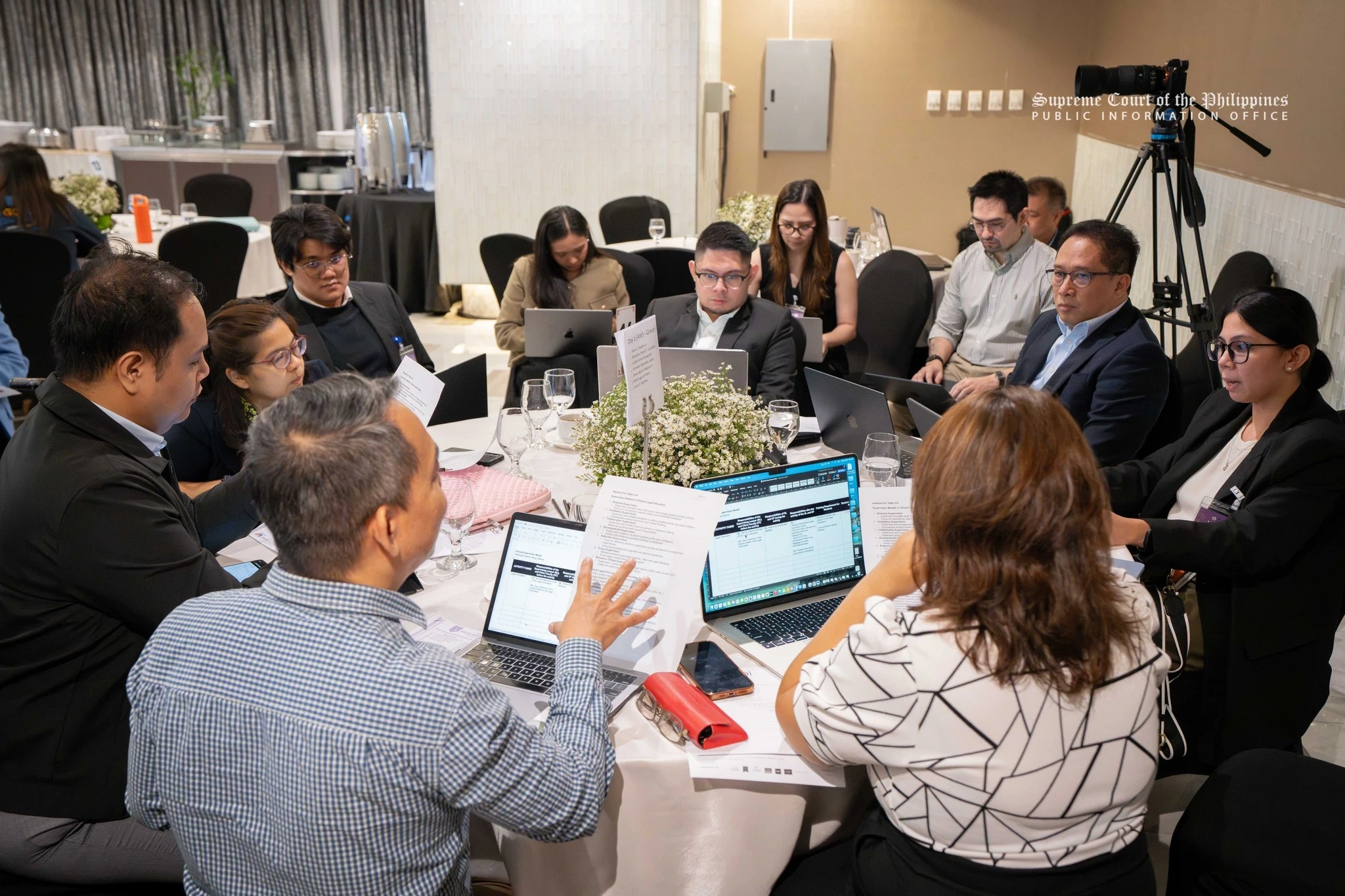
Participants joined multisectoral breakout sessions where they raised common concerns on supervision standards, assessment frameworks, institutional capacity, and the need to balance student learning with client welfare.
In her closing remarks, SC Associate Justice Maria Filomena D. Singh, Vice-Chairperson of the Oversight Committee, stressed that the discussions reaffirmed the need to place clinical legal education at the core of legal training rather than treating it as a mere compliance requirement.
She likewise underscored that 𝘙𝘶𝘭𝘦 138-𝘈 intentionally links practice readiness with access to justice by allowing law students, under structured supervision, to do real legal work for real clients, especially those from marginalized and underserved sectors.
 3
3 3
3 3
3 3
3 3
3